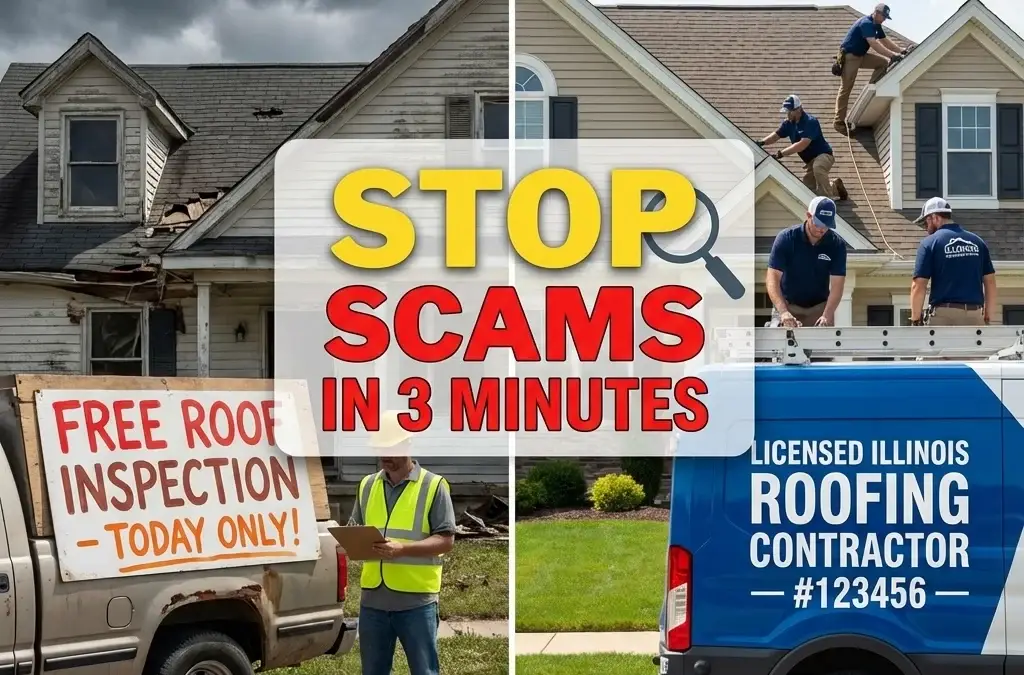
After a storm hits Illinois, they arrive like clockwork. You'll see trucks with out-of-state plates cruising through neighborhoods, knocking on doors with promises of quick fixes and leftover materials. These are storm chasers, and they're counting on your urgency to make a costly mistake.
Here's the reality: spotting a roofing scam doesn't require a degree in construction. It takes less than three minutes and a few simple questions. Let's break down exactly what to look for so you can protect your home and your wallet.
The Storm Chaser Playbook: What They Don't Want You to Know
Storm chasers follow the same script everywhere they go. They show up unannounced, usually within days of severe weather, claiming they "happened to be in the neighborhood" and noticed damage to your roof. Sound familiar?
These operators aren't necessarily from Illinois. They follow storm patterns across the Midwest, setting up temporary operations and disappearing once they've collected enough deposits. They rely on homeowners feeling overwhelmed and making quick decisions.
Here's their typical approach: They'll offer to inspect your roof for free, then climb up and actually create damage by pulling off shingles or loosening materials. When they come down, they'll show you "evidence" of storm damage that they just caused themselves.
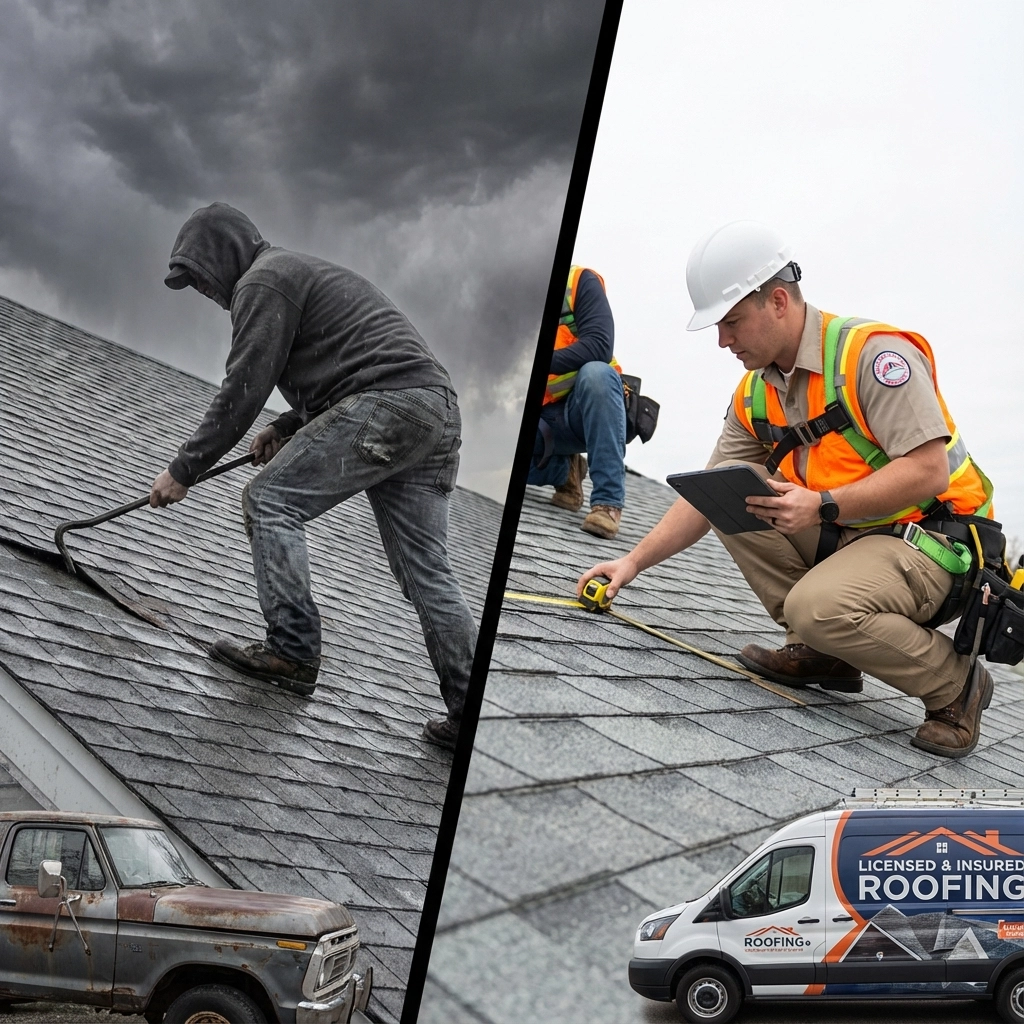
The pressure comes next. They'll claim they have leftover materials from another job nearby and can offer you a significant discount: but only if you sign today. They might even offer to help you navigate your insurance claim, positioning themselves as your advocate against the big, bad insurance company.
Don't fall for it. Legitimate contractors don't need to manufacture urgency or damage to secure work.
Licensed Contractors: The Real Deal
A licensed contractor operates differently from day one. They've invested in proper licensing, insurance, and local reputation because they plan to be here tomorrow, next year, and the year after that.
When you contact a legitimate roofing contractor, they'll provide their license number upfront without hesitation. They understand you need to verify their credentials, and they make it easy for you to do so. In Illinois, you can check contractor licenses through the Department of Financial and Professional Regulation website.
Licensed contractors also carry proper insurance: both general liability and workers' compensation. They'll provide certificates of insurance upon request, and you can contact their insurance company directly to verify coverage.
Most importantly, they understand that quality work takes time. A legitimate contractor will schedule a thorough inspection, provide a detailed written estimate, and give you time to review everything before making a decision.
The 3-Minute Scam Detection Test
When someone approaches you about roof work, use this quick checklist to separate the professionals from the scammers:
Question 1: "Can you provide your Illinois contractor license number right now?"
A legitimate contractor will immediately provide this information. Storm chasers will give excuses, claim they don't need one for small jobs, or promise to get it to you later. In Illinois, any contractor performing work over $1,000 must be licensed.
Question 2: "Do you have a local business address I can visit?"
Real contractors have established business locations with permanent addresses. Storm chasers work out of hotel rooms or temporary setups. If they can't provide a local address or only give you a P.O. Box, that's a red flag.
Question 3: "Can you provide references from jobs completed in the last six months?"
Legitimate contractors are proud of their recent work and will gladly provide references. Storm chasers either can't provide references or will give you fake ones. Always call these references yourself.
If someone fails any of these three questions, thank them for their time and send them on their way.
Red Flags That Should Send You Running
Beyond the basic questions, watch for these warning signs that scream "scam":
Door-to-door solicitation after storms is the biggest red flag. Reputable contractors are busy enough with scheduled work and referrals that they don't need to knock on doors. When legitimate contractors do storm restoration work, it's typically because homeowners contact them directly.
Pressure to sign immediately is another classic scammer move. They'll claim the deal expires today or that materials are limited. Real contractors understand that roof replacement is a significant investment and will give you time to make an informed decision.
Asking for full payment upfront should immediately end the conversation. Legitimate contractors typically request a small deposit to begin work, with the balance due upon completion. Never pay the full amount before work begins.
Claiming they can guarantee insurance approval is impossible. No contractor can guarantee what your insurance company will or won't cover. They can help you navigate the process, but they can't control the outcome.
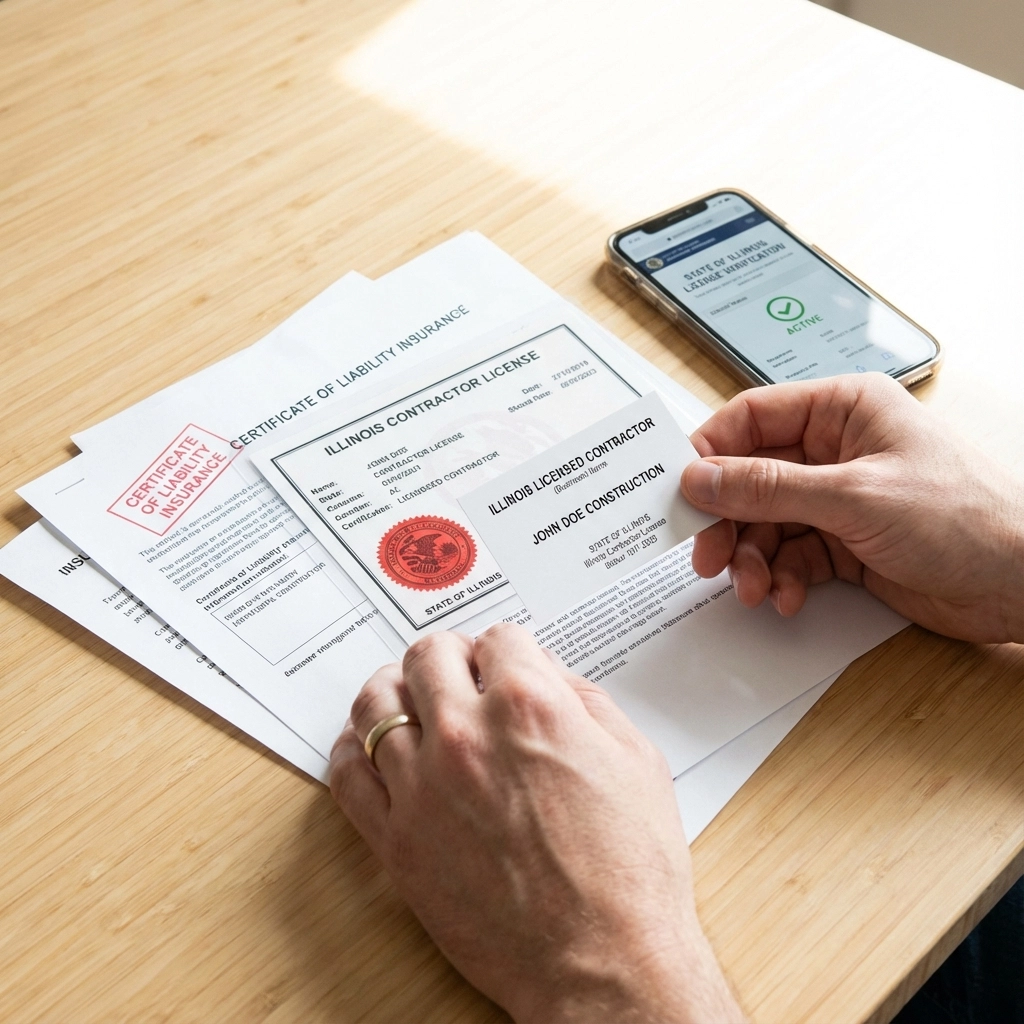
What Legitimate Documentation Looks Like
When you're working with a real contractor, you'll receive proper documentation at every step. Here's what to expect:
A detailed written estimate should include specific materials, labor costs, timeline, and warranty information. It should be typed on company letterhead with complete contact information, not handwritten on a scrap of paper.
The contract should clearly outline the scope of work, materials to be used, start and completion dates, total cost, payment schedule, and warranty terms. Both parties should sign and date the contract, and you should receive a copy immediately.
Insurance certificates should come directly from the insurance company, not photocopies provided by the contractor. You can contact the insurance company to verify coverage is current and adequate for your project.
Permit documentation is crucial for major roof work. In most Illinois municipalities, roof replacement requires permits. A legitimate contractor will handle the permit process as part of their service, not ask you to pull permits yourself.
The Illinois Advantage: Local Knowledge Matters
Working with local Illinois contractors provides advantages that storm chasers simply can't match. Local contractors understand our unique weather challenges, from lake-effect snow in the north to severe thunderstorms throughout the state.
They know local building codes and permit requirements, which vary significantly between municipalities. A contractor familiar with Chicago's requirements might struggle with Rockford's codes, and storm chasers typically know neither.
Local contractors also understand Illinois insurance practices and can effectively communicate with adjusters who regularly work in our market. They know which insurance companies are reasonable and which ones require extra documentation.
Most importantly, local contractors will be here next year when you need warranty work or have questions. Storm chasers disappear with the weather.
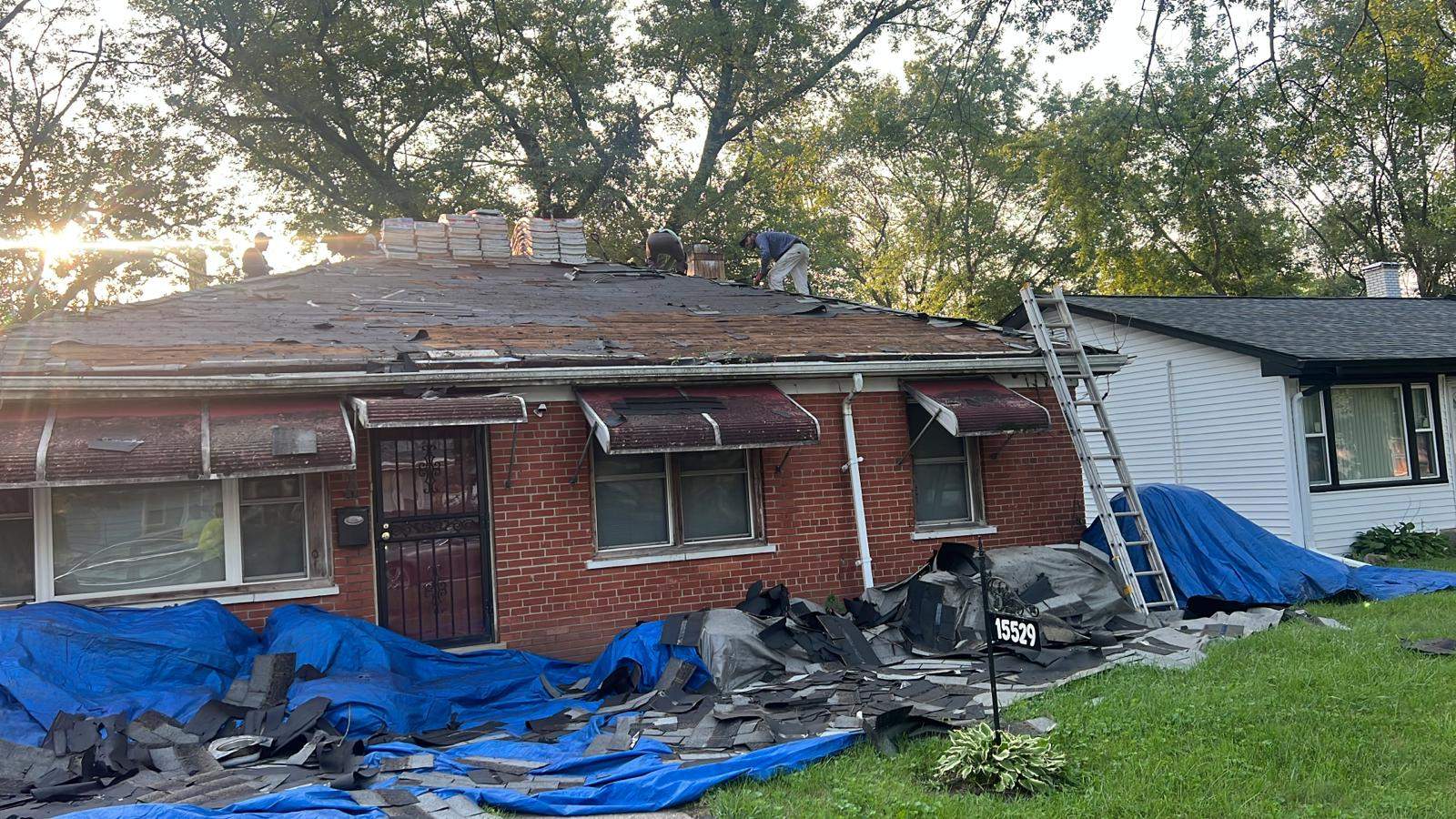
When Things Go Wrong: Your Protection Options
If you've been victimized by a roofing scam, you're not without recourse. Illinois has several agencies that investigate contractor fraud and can help you recover damages.
The Illinois Attorney General's office handles consumer fraud cases and maintains a database of complaints against contractors. Filing a complaint helps protect other homeowners and may lead to prosecution of the scammers.
The Better Business Bureau tracks patterns of complaints and can help mediate disputes with contractors. Even if the scammer isn't BBB accredited, filing a complaint creates a paper trail for law enforcement.
Your local police department should be notified of door-to-door scammers operating in your area. They may already be investigating similar complaints and your information could help their case.
Contact your insurance company immediately if you suspect fraud in connection with a claim. Insurance fraud is a serious crime, and companies have dedicated investigators to pursue these cases.
Building Your Defense Strategy
The best defense against roofing scams is preparation before you need repairs. Research reputable local contractors now, before storms hit and you're making decisions under pressure.
Ask neighbors and friends for recommendations. Check online reviews, but be skeptical of contractors with only recent five-star reviews: these could be fake. Look for contractors with a mix of reviews over several years.
Verify credentials through official sources. Don't just take their word for it or trust certificates they show you. Use state and local government websites to confirm licensing and check for complaints.
Get multiple estimates for any significant work. This helps you understand fair market pricing and gives you options when storm chasers promise unrealistic deals.
Keep contact information for trusted contractors readily available. When storm damage occurs, you'll be able to call someone you've already vetted instead of falling victim to whoever knocks first.
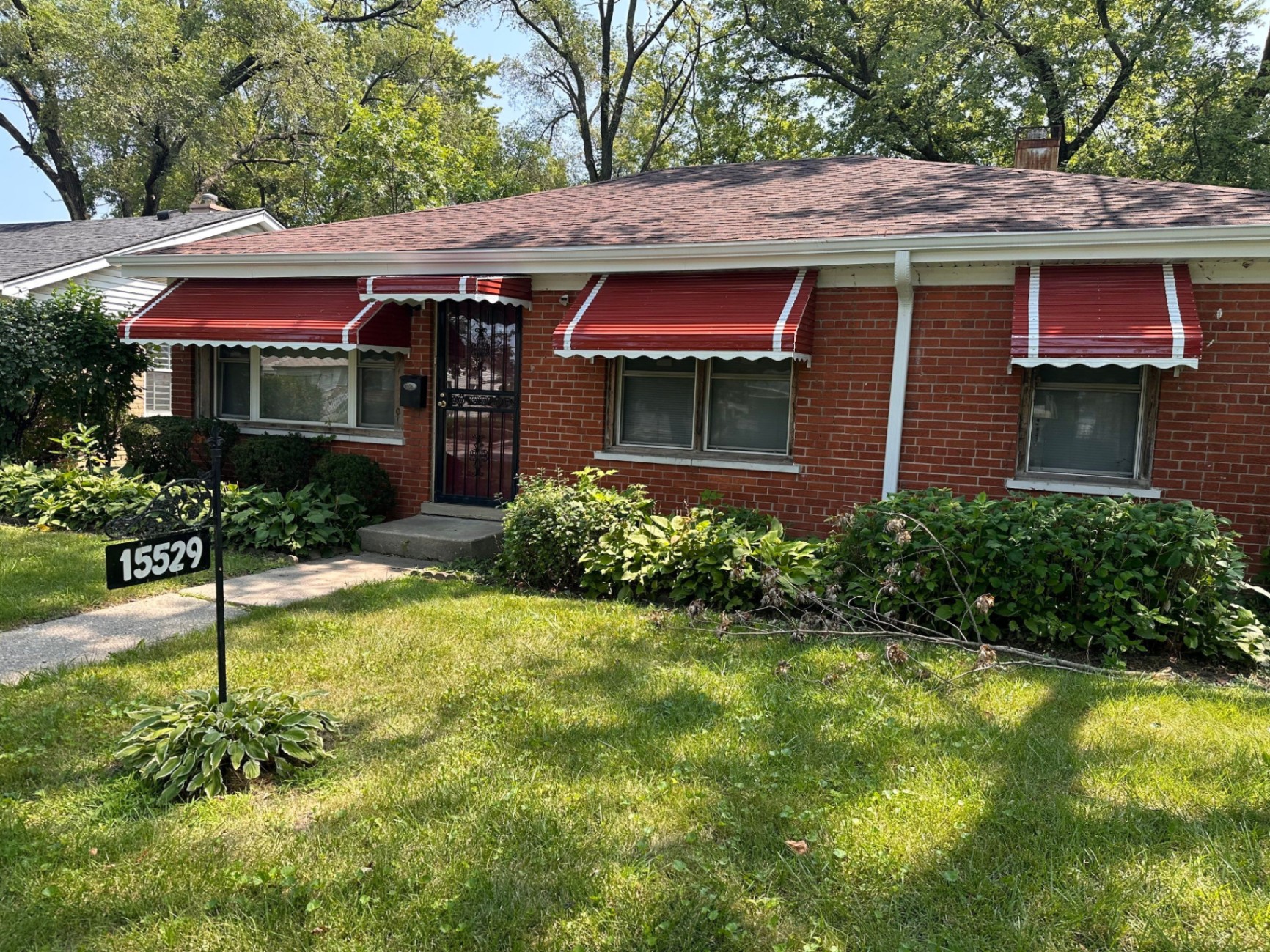
Making the Right Choice
Choosing the right contractor isn't about finding the lowest price or the fastest completion time. It's about finding someone who will properly protect your most valuable asset: your home.
Legitimate contractors like Roof Rescuer invest in proper licensing, insurance, and local presence because we're committed to serving Illinois homeowners for the long term. We understand that your roof protects everything you've worked for, and we take that responsibility seriously.
When storm chasers come knocking, you'll now have the knowledge to spot their tactics and protect yourself. Remember: three minutes of questions can save you thousands of dollars and months of headaches.
Take your time, verify credentials, and choose a contractor who will stand behind their work long after the storm clouds have passed. Your roof: and your peace of mind( deserve nothing less.)